About
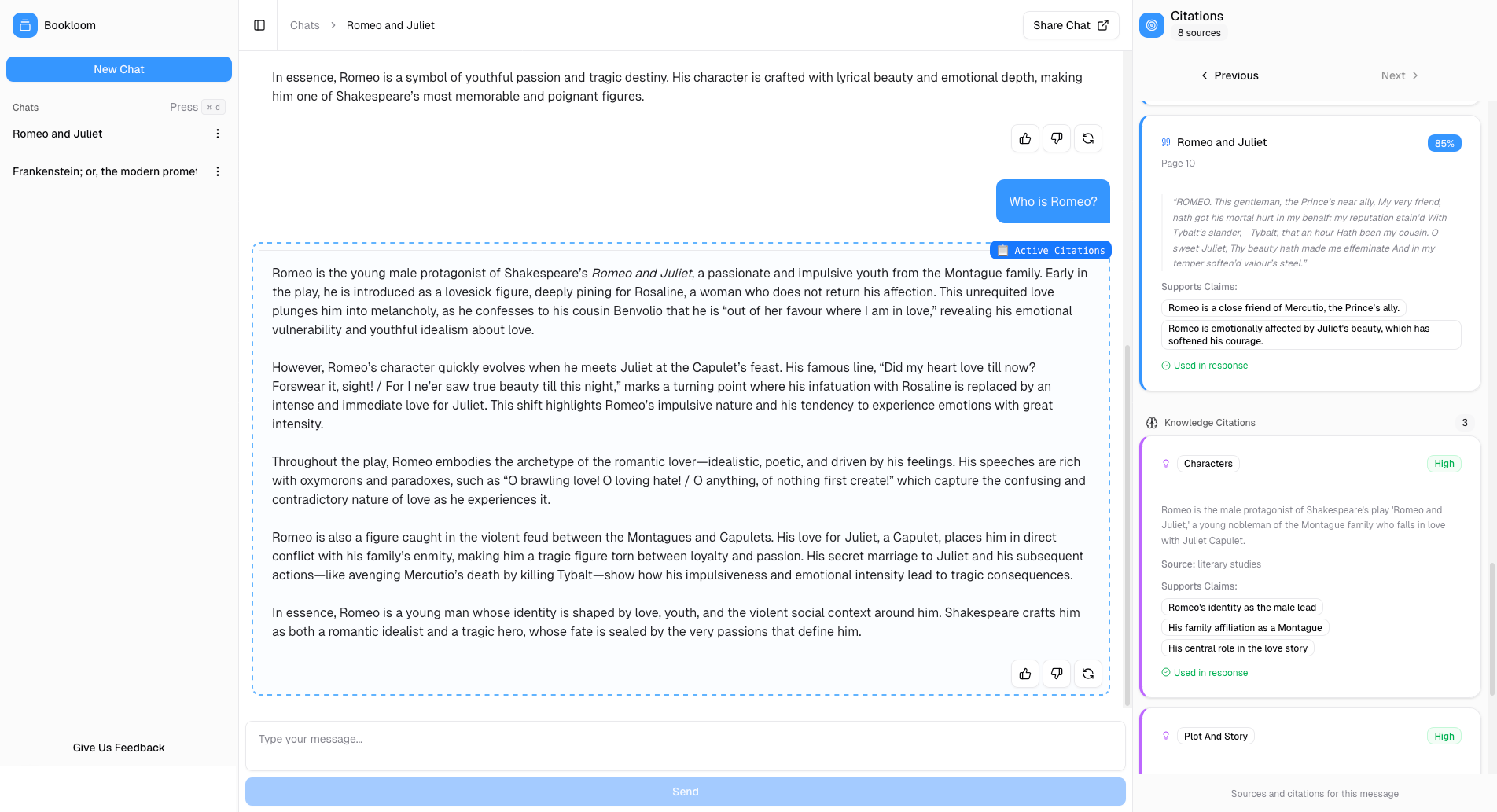
Bookloom is an AI reading companion. You import a book, then ask questions about it, and every answer stays grounded in the actual text and traceable back to specific pages.
Rather than handing a book to a chatbot and hoping, it runs a multi-step research workflow before answering. Query generation, hybrid retrieval, page reconstruction, then citation analysis. Responses separate what came from the book from what the model already knew.
Built for Unboxed Software during my employment as sole architect and primary engineer. It was the company's first in-house AI product, launched in three months, and I authored roughly 87% of the codebase.
Key Features
- Hierarchical retrieval. Books are indexed twice, as coarse 20-page segments and fine 400-token chunks, so the retriever narrows to the right section before drilling into detail.
- Hybrid search. BM25 keyword search runs alongside vector similarity, so exact names and phrases surface next to semantically related passages.
- Page-level citations. Every answer cites specific pages with relevance scores and the claims each source supports.
- Book and knowledge citations. Responses separate what came from the text from what the model already knew, so nothing goes silently unsourced.
- Async ingestion. A Celery queue handles chunking, embedding and indexing, so a 300+ page book processes without blocking the user.
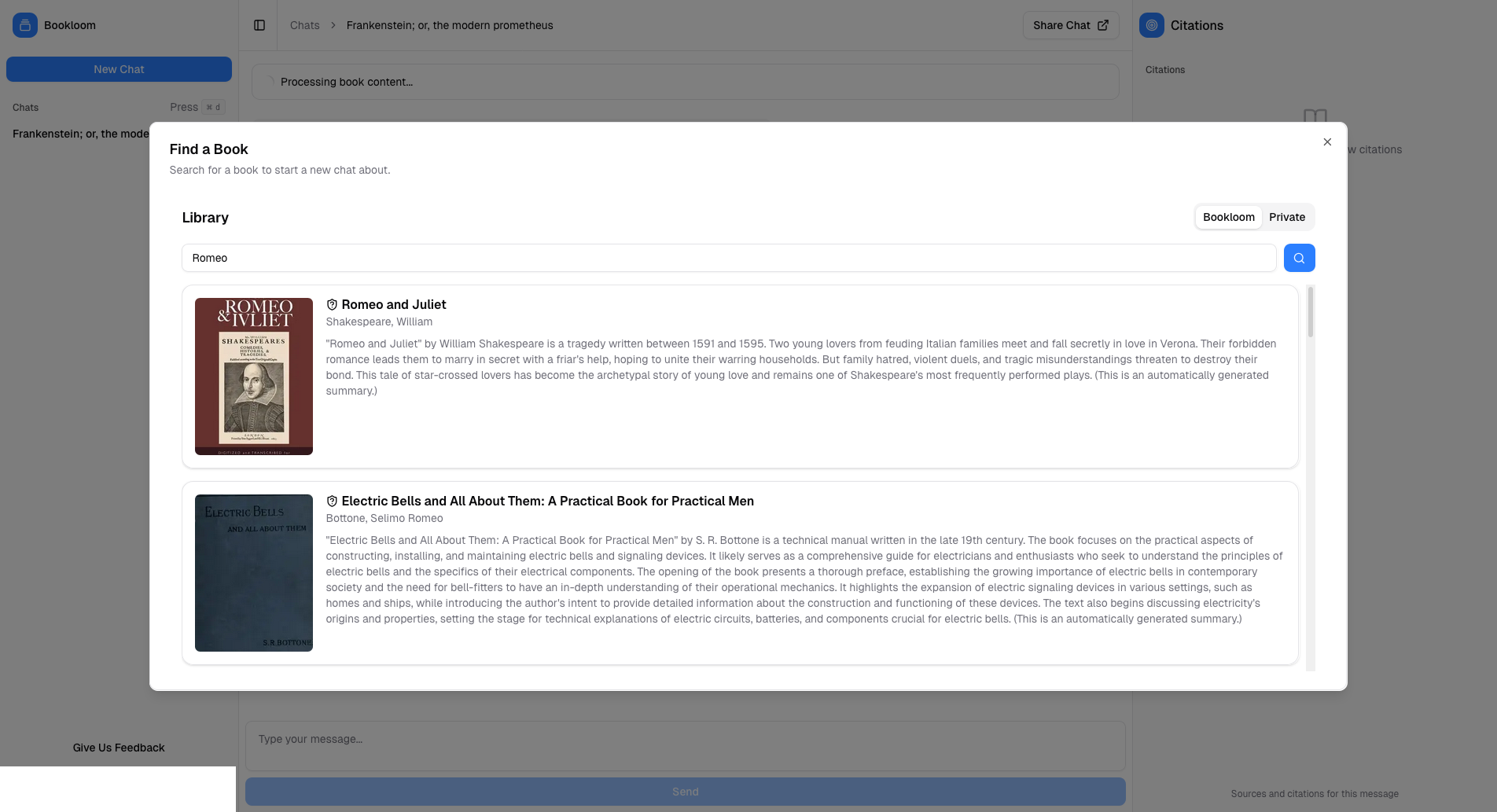
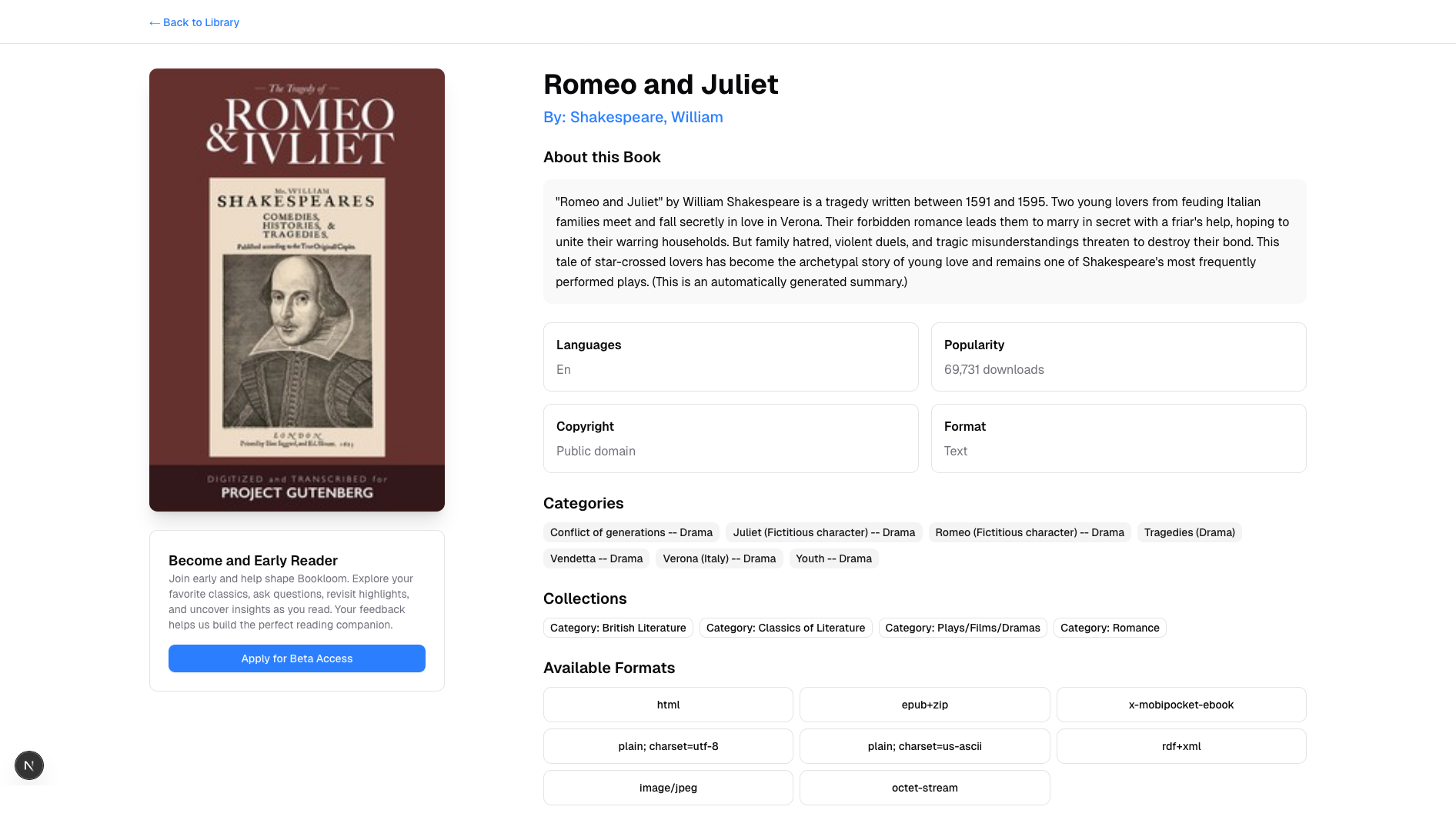
- Four import sources. Project Gutenberg supplies full text. Google Books and OpenLibrary supply metadata. Private PDFs upload directly.
- Shareable threads. Share links publish a conversation along with its citations.
Tech Stack
- TypeScript
- Next.js 15
- React 19
- tRPC
- Drizzle ORM
- Jotai
- Tailwind CSS
- Radix UI
- NextAuth.js v5
- FastAPI (Python)
- Celery
- Redis
- Tortoise ORM
- PostgreSQL + pgvector
- Voyage AI
- OpenRouter
- OpenAI
- LlamaIndex
- AWS S3
- Langfuse
- PostHog
- Turborepo + Bun
- Docker
- Vercel
Video
0:00
/0:21
Screenshots